Swapping a Light Fixture for a Ceiling Fan: What the Ceiling Box Has to Carry
The fan is the easy part. What holds it up above your head is what decides whether the swap is a quick job.
October 17, 2026 · 3 min read
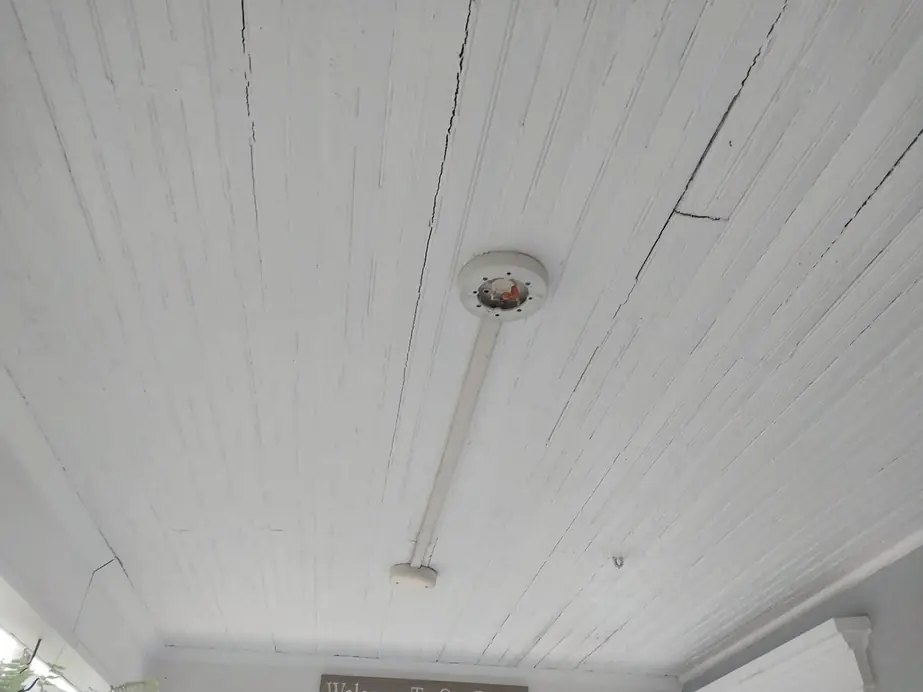
A ceiling fan looks like a light fixture with blades. It isn't. A light fixture hangs there. A fan swings, pulls, and vibrates every minute it runs, and the box in the ceiling takes all of that. A box that was fine for a flush-mount light can loosen over a summer of use if it wasn't built for a fan. Before you pick a fan, find out what's behind the ceiling.
What a fan-rated box looks like
A standard light box is often a thin plastic or metal box held with a couple of small screws or nails into a joist. It's meant to carry a light and not much more. A box that's meant for a fan is made from sturdier metal or heavy plastic, and it's marked on the box itself, usually with wording like suitable for fan support, along with a weight limit. The box is fastened solidly to a joist or to a brace that spans between two joists.
You can often check by turning off the circuit at the panel, removing the old fixture, and looking inside. If you don't see a fan-support marking, don't assume the box is fine because the light has hung there for years. A light and a spinning fan put very different forces on the same spot.
Bracing when the box isn't enough
If the box isn't rated, there are a few ways to fix it. In a ceiling with attic access above, a brace can be fastened between joists and a fan-rated box attached to it. Without attic access, there are fan-rated retrofit boxes designed to be fed through the existing opening and expanded to grip the joists on either side. Older Columbus homes with plaster ceilings and old wiring can complicate this. Plaster doesn't forgive rough handling, and old cloth-covered wires can be brittle.
Where the old box sits matters too. A box that isn't centered on the joist may need to be moved, which means patching the ceiling afterward. That's a sensible time to bring in someone who also does drywall repair and painting, so the patch isn't a separate project.
Weight, height and balancing
Fans differ in weight, so check the number printed on the box and compare it with the fan's spec sheet. Blade clearance matters too. Blades should sit comfortably above head height, and a low ceiling often calls for a flush-mount fan rather than one on a long rod. In a tall room, a longer downrod gets the blades down where they can move air.
A wobble after installation usually has simple causes. A loose blade screw, a blade that's warped or bent, a loose canopy or a box that isn't solid. Most fans come with a balancing kit, a small clip and weights. Tighten everything first, then balance. If it still shakes after that, look at the box again, because that's the part that can cause a problem that never goes away.
Porches and other damp spots
A covered front porch in Ohio gets humid summers, blowing rain and cold winters. Fans meant for outdoor porches carry a damp or wet rating, and the rating should be listed on the packaging. An indoor fan on a porch ceiling may look fine for one season and then rust, warp and fail early. Pick the rating to match where the fan hangs. Also pay attention to blade material, since some indoor blades swell in damp air.
Porch ceilings are often tongue-and-groove boards over a thin box, or a plain drywall or vinyl ceiling. The box still has to be fan-rated and secured to framing. A before photo of the existing fixture and ceiling is a handy thing to text over when you're asking about a swap like this.
When you need an electrician
Replacing a fixture with a fan on an existing, working circuit, with a good fan-rated box, is routine handyman work. Some situations aren't. There may be no wiring at the spot where you want a new fan. The wiring may be damaged or old and unsafe. You may want separate switches for the fan and light and the switch loop doesn't allow it, or you may want a new circuit. Those are electrician jobs, and a trustworthy handyman will tell you so rather than guess.
Columbus Ohio TOP Handyman Services installs light fixtures and ceiling fans, along with outlets, switches and smoke detectors, across Columbus and the suburbs within about 30 miles. Estimates are free, and the work comes with a one-year workmanship warranty. Call or text 380-283-9950 and describe what's in your ceiling.
Columbus Ohio TOP Handyman Services, 380-283-9950
Call 380-283-9950More articles
A Fall Gutter Checklist for Central Ohio Homes
A dry afternoon in October is the cheapest time to find the gutter problems that winter would otherwise find for you.
The Dripping Faucet and the Running Toilet: Small Leaks Worth Fixing Before Winter
Most of these leaks announce themselves quietly, and most of them are simple to track down once you know where to look.